Medtronic selects BD'M
Medtronic has selected BD'M to help tell is corporate story, and what a story it is. From two guys in a garage in 1955, the first pacemaker, to a $16 billion leader in medical technology. And what's rare about them is their culture – they haven't changed a single word in their mission statement since it was written in 1960, and every employee can recite it by heart. You don't usually that in companies of this size.

Gaming as a form of strategic marketing.
We've all seen the brief: raise awareness, shape new customer behaviors, launch a new product and generate revenue.
Historically, this brief has been answered through an advertising campaign. But in a world in which collaboration and experiences often trump one way communications, gaming is fast becoming a bankable marketing strategy.
A while back I attended a thought-provoking presentation by Dr. Jane McGonigal, a leading game designer and researcher, about the social benefits of gaming. Dr. McGonigal believes that gamers exhibit four personality traits that are essential for problem solving:

Historically, this brief has been answered through an advertising campaign. But in a world in which collaboration and experiences often trump one way communications, gaming is fast becoming a bankable marketing strategy.
A while back I attended a thought-provoking presentation by Dr. Jane McGonigal, a leading game designer and researcher, about the social benefits of gaming. Dr. McGonigal believes that gamers exhibit four personality traits that are essential for problem solving:
- urgent optimism
- social collaboration
- blissful productivity
- epic meaning
Perhaps inspired by Albert Einstein's quote – "Games are the most elevated form of investigation." – her work focuses on ways to harness gamers' collective intelligence and creativity to solve societal challenges, such as imagining a world without oil, or new ways to bring water to sub-Saharan Africa.
Now companies are embracing gaming as a business strategy. Within the past few months I've witnessed B2B gaming initiatives from IBM, Cisco, GE, SAP and Microsoft. Each is using gamification to engage customers in a deeper brand narrative, or to train sales people.

BD'M used gamification to help United Airlines sell its new suite of Travel Options. We designed a game around each Travel Option – e.g., Line Jump Hero, Legroom Legend, Mileage Ace – that could be played online or on smart phones. After being played over nine million times and generating millions of dollars in incremental revenue for United, The Mobile Marketing Association named the Optathlon games the best mobile promotion in 2011.
This new presentation by PSFK provides a thorough and clear case for gaming as a business strategy. Gaming has the potential to communicate; to teach; to solve; to alter behavior; to raise money. It does so through its unique ability to tap into peer competition and one-upsmanship; stakes and rewards; exclusivity and access.
Marketing to the 66%.
A big issue confronting marketers is the shrinking middle class consumer. Let's call them the 66%, after accounting for the famed 1% and the 33% of Americans living near or below poverty levels (an even bigger issue).
The middle class, a core target for most marketers, is hurting because technology and process-driven productivity increases is eliminating middle management jobs in manufacturing and service industries.
In 2011 marketers witnessed what the WSJ calls the "Barbell Effect." Marketers catering to wealthy consumers fared relatively well. Sales at Saks and Nordstrom were strong, as were sales for Mercedes, Land Rover, Porsche and BMW. At the other end of the "barbell," sales at dollar stores and discount chains spiked as the middle class traded down, causing marketers such at Heinz and P&G to focus on discounting and bargain brands.
What should marketers do? I'd suggest CMOs look at what Hyundai has done over the last few years to drive a remarkable surge in sales. Several years back, Hyundai began addressing the fundamental issue depressing sales -- FEAR. The vast majority of consumers are not facing layoffs or home foreclosures, yet they curtail spending because they're understandably anxious about the future.
Hyundai launched its Assurance program, allowing consumers to return their new car within a year of purchase if they lost their job. (Sales jumped 14% that month while the industry was down 37%.) The company followed that by sweetening the program by offering to pay the vehicle loan or lease for 90 days while the owner looked for work. Moreover, Hyundai has also made buyers feel smart – another way to alleviate fear – through its warranty program, styling and quality.
Looking back on my recession-themed posts (a topic I look forward to not writing about in the future!), the strategies suggested at the outset of this recession remain applicable today:
The middle class, a core target for most marketers, is hurting because technology and process-driven productivity increases is eliminating middle management jobs in manufacturing and service industries.
In 2011 marketers witnessed what the WSJ calls the "Barbell Effect." Marketers catering to wealthy consumers fared relatively well. Sales at Saks and Nordstrom were strong, as were sales for Mercedes, Land Rover, Porsche and BMW. At the other end of the "barbell," sales at dollar stores and discount chains spiked as the middle class traded down, causing marketers such at Heinz and P&G to focus on discounting and bargain brands.
What should marketers do? I'd suggest CMOs look at what Hyundai has done over the last few years to drive a remarkable surge in sales. Several years back, Hyundai began addressing the fundamental issue depressing sales -- FEAR. The vast majority of consumers are not facing layoffs or home foreclosures, yet they curtail spending because they're understandably anxious about the future.
Hyundai launched its Assurance program, allowing consumers to return their new car within a year of purchase if they lost their job. (Sales jumped 14% that month while the industry was down 37%.) The company followed that by sweetening the program by offering to pay the vehicle loan or lease for 90 days while the owner looked for work. Moreover, Hyundai has also made buyers feel smart – another way to alleviate fear – through its warranty program, styling and quality.
Looking back on my recession-themed posts (a topic I look forward to not writing about in the future!), the strategies suggested at the outset of this recession remain applicable today:
- Reduce anxiety by making consumers feel smart;
- Appeal to consumer's need for emotional security and "cocooning";
- Get closer to your best customers through true loyalty incentives and CRM;
- Consider tiered pricing and value options;
- Invest in innovation – "new" is still a powerful lure;
- Finally, don't let a good crisis go to waste – refocus and reprioritize all elements of your product portfolio, marketing and media mix.
A case for SMS over QR codes.
QR codes are the rage in marketing. I'm not yet a full-on fanboy.
Adoption rates are low. The user experience is spotty. Today's piece on CNN summarizes many of the key reasons, including the most basic – it is complicated and time-consuming. My earlier posts on misusing QR codes noted that many marketers are leading customers to content that is largely unsatisfying. Why go through the bother of snapping a QR to get the same content I could have gotten by typing a URL?
Asking consumers to text DEMO to 1234 to view a product demonstration is familiar and uncomplicated, can be done on every smart phone, in every lighting environment. To me, that sounds like the quickest response.
Clearly, we need to avoid blanket prognostications. Tech-savvy consumers and professionals are prime candidates for using QR codes. It's hard to flip through an issue of Wired without seeing QRCs from marketers as diverse as The Glenlivet, Goldman Sachs and Microsoft.
We may reach a tipping point as QR readers become native features within smart phones, and as their quality improves. We may also encounter alternatives to QR readers – I've had good experiences to date interacting with print ads embedded with Google Goggles.
Mobile is an opt-in response device more so than an advertising medium. It has the power to blur offline and online marketing. It is a central part of a brand's overall "screen strategy" in which we seamlessly link the power of sight, sound and motion across TV, online and mobile.
Marketers do best when they embrace fundamental human behaviors. We all know how to send text messages. Inserting an SMS call to action may be a better alternative to inserting a QRC, which may not work, depending on the lighting, may not be enabled on the phone, or may or not be fully understood by most people.
Adoption rates are low. The user experience is spotty. Today's piece on CNN summarizes many of the key reasons, including the most basic – it is complicated and time-consuming. My earlier posts on misusing QR codes noted that many marketers are leading customers to content that is largely unsatisfying. Why go through the bother of snapping a QR to get the same content I could have gotten by typing a URL?
Asking consumers to text DEMO to 1234 to view a product demonstration is familiar and uncomplicated, can be done on every smart phone, in every lighting environment. To me, that sounds like the quickest response.
Clearly, we need to avoid blanket prognostications. Tech-savvy consumers and professionals are prime candidates for using QR codes. It's hard to flip through an issue of Wired without seeing QRCs from marketers as diverse as The Glenlivet, Goldman Sachs and Microsoft.
We may reach a tipping point as QR readers become native features within smart phones, and as their quality improves. We may also encounter alternatives to QR readers – I've had good experiences to date interacting with print ads embedded with Google Goggles.
Mobile is an opt-in response device more so than an advertising medium. It has the power to blur offline and online marketing. It is a central part of a brand's overall "screen strategy" in which we seamlessly link the power of sight, sound and motion across TV, online and mobile.
Marketers do best when they embrace fundamental human behaviors. We all know how to send text messages. Inserting an SMS call to action may be a better alternative to inserting a QRC, which may not work, depending on the lighting, may not be enabled on the phone, or may or not be fully understood by most people.
The age of screen strategies.
Video content, regardless of the type of screen on which it appears, was the star topic at this week's UBS global media and communications conference.
TV advertising is not dead, as many people mistakenly proclaim. Worldwide spending on television advertising is growing. Viewership remains strong, albeit increasingly splintered.
But this fact hides the bigger opportunity for marketers — it's no longer about television, it's about "screens."
I watch football live on my TV, but I stream CNN live on my iPad. I DVR "Modern Family" but use Hulu+ for my daily dose of Stewart, Colbert and Portlandia. Other times I stream "Once Upon a Time" (my guilty pleasure) on abc.com.
Even my "print" is on a screen, mostly The New York Times and Wired on my mobile appendages.
All of these screens provide ample opportunities marketers to employ sight, sound and motion — the building blocks of memorable storytelling.
TV advertising became king in its day because of the persuasiveness of sight, sound and motion. Unlike the original Mad Men, we now have myriad opportunities to use this branding tactic. (That's why I believe this is truly the most exciting time in our business.)
The key to an effective screen strategy is not simply to create video content, but to determine in advance ways to seamlessly integrate and link these storytelling assets. For example, the SMS call to action in the print should lead to product demonstration videos that subsequently link me to customer testimonial videos on the website. Using screens is smart; connecting screens is smarter.
The successful screen strategies are those that create custom content for each screen's unique context and experience. For example, shows on Hulu+ or abc.com are usually sponsored by a single advertiser. The common mistake is to run one TV commercial four times (and be annoyingly repetitive) and miss the opportunity tell an ever-deeper story in four chapters. (Remember, unlike TV, online viewers cannot skip the ads.)
TV advertising is not dead, as many people mistakenly proclaim. Worldwide spending on television advertising is growing. Viewership remains strong, albeit increasingly splintered.
But this fact hides the bigger opportunity for marketers — it's no longer about television, it's about "screens."
I watch football live on my TV, but I stream CNN live on my iPad. I DVR "Modern Family" but use Hulu+ for my daily dose of Stewart, Colbert and Portlandia. Other times I stream "Once Upon a Time" (my guilty pleasure) on abc.com.
Even my "print" is on a screen, mostly The New York Times and Wired on my mobile appendages.
All of these screens provide ample opportunities marketers to employ sight, sound and motion — the building blocks of memorable storytelling.
TV advertising became king in its day because of the persuasiveness of sight, sound and motion. Unlike the original Mad Men, we now have myriad opportunities to use this branding tactic. (That's why I believe this is truly the most exciting time in our business.)
The key to an effective screen strategy is not simply to create video content, but to determine in advance ways to seamlessly integrate and link these storytelling assets. For example, the SMS call to action in the print should lead to product demonstration videos that subsequently link me to customer testimonial videos on the website. Using screens is smart; connecting screens is smarter.
The successful screen strategies are those that create custom content for each screen's unique context and experience. For example, shows on Hulu+ or abc.com are usually sponsored by a single advertiser. The common mistake is to run one TV commercial four times (and be annoyingly repetitive) and miss the opportunity tell an ever-deeper story in four chapters. (Remember, unlike TV, online viewers cannot skip the ads.)
Shifting attitudes toward premium brands.
The 2011 Mendelsohn Affluence Survey reinforces several themes from my earlier posts on premium branding. For example, the definition of premium is relative – 89% agree luxury is in the eye of the beholder (a BMW is clearly premium to most, while a Prius is premium to others). Premium brands continue to derive their worth from the emotional content and meaning they convey.
The study also shows how the definitions of luxury and premium brands is shifting. Value is playing an increasingly large role. Small indulgences can be as rewarding as buying an expensive luxury item. Some consumers are defining these at "treats.
The study also shows how the definitions of luxury and premium brands is shifting. Value is playing an increasingly large role. Small indulgences can be as rewarding as buying an expensive luxury item. Some consumers are defining these at "treats.
Thinking inside the box.
Marketing a service can be challenging because it is intangible. (I learned this first hand when I led Marketing Communications at Aetna Healthcare.)
 I'm seeing a trend toward productizing intangible services – i.e., making the service look and feel like a packaged good you might find on a store shelf.

More service brands are tackling this challenge by literally thinking inside the box.
 I'm seeing a trend toward productizing intangible services – i.e., making the service look and feel like a packaged good you might find on a store shelf.
GM OnStar is the latest marketer to embrace this idea. By placing a satellite-based service in a box, it now feels like something consumers can better comprehend, something you could imagine buying at Best Buy.

Perhaps GM is lifting a page from Progressive Insurance's playbook. We all know Flo works in an "insurance store" filled with boxes of insurance products. Again, seeing things in boxes = tangible = comprehensible. Going even further in this direction, Progressive's new Snapshot is truly a tangible product – a monitoring device customers plug into their car to receive safe driving discounts.
Over the last few years, ING Direct has launched banking cafes in eight cities around the U.S. to help transform IRAs and CDs into a tangible brand experience.
Looking back, I suggest that Jyske Bank is the Rosetta Stone for this trend toward productizing intangible services. Several years ago Denmark's second largest bank transformed its dusty banks into something akin to Apple Stores, complete with boxes of banking products displayed on shelves. (See my earlier post on Jyske Bank. It's a fascinating case study.)
These examples provide a perfect illustration of embracing design as a business strategy, not as an aesthetic process.
Innovation – aka, don't let a good crisis go to waste.
The Wall Street Journal's small business innovation competition shows how businesses can succeed in a poor economic climate by using the realities of the marketplace as a source of new business models and product offerings.
This made me pause to think about our small business, Barrie D'Rozario Murphy. Starting an agency on the eve of the Great Recession is a focusing experience. And while we were named in 2009 by the 4As as the "best small agency in the U.S.", we believe we've gotten better since because we started rethinking what marketers need from an agency.
Our clients needs ideas – not just TV ideas; not just print ideas; not just banner ad ideas. They need the best solution for the problem at hand. Any agency that specializes in one solution, whether that is TV or interactive or social media, is the proverbial hammer that views all problems as nails.
We deepened our commitment to being an agency with "no walls." No walls between us and our clients; no walls between us and other partners working for our clients; no walls preventing us from discovering new and innovative partners that can help our clients succeed; no walls between people of different disciplines.
"No Walls" has inspired us to design smart phone games to sell a la carte travel options for United Airlines (using gamification as a powerful communications strategy). We created an extensive iPad app for Medtronic to tell its corporate brand story (the modern version of the :60 corporate branding effort traditionally reserved for Sunday morning news programs). We created social media savvy street teams to launch Best Buy's eBikes program (the new way to link local events to a larger audience).
And throughout this journey we haven't lost our advertising mojo, having created beautiful print, TV and promotional programs that have been recognized with Gold Lions in Cannes and EFFIE Awards from the American Marketing Association.
The morale of the story. Never led a good crisis go to waste. Rethink everything, and discover something even better.
This made me pause to think about our small business, Barrie D'Rozario Murphy. Starting an agency on the eve of the Great Recession is a focusing experience. And while we were named in 2009 by the 4As as the "best small agency in the U.S.", we believe we've gotten better since because we started rethinking what marketers need from an agency.
Our clients needs ideas – not just TV ideas; not just print ideas; not just banner ad ideas. They need the best solution for the problem at hand. Any agency that specializes in one solution, whether that is TV or interactive or social media, is the proverbial hammer that views all problems as nails.
We deepened our commitment to being an agency with "no walls." No walls between us and our clients; no walls between us and other partners working for our clients; no walls preventing us from discovering new and innovative partners that can help our clients succeed; no walls between people of different disciplines.
"No Walls" has inspired us to design smart phone games to sell a la carte travel options for United Airlines (using gamification as a powerful communications strategy). We created an extensive iPad app for Medtronic to tell its corporate brand story (the modern version of the :60 corporate branding effort traditionally reserved for Sunday morning news programs). We created social media savvy street teams to launch Best Buy's eBikes program (the new way to link local events to a larger audience).
And throughout this journey we haven't lost our advertising mojo, having created beautiful print, TV and promotional programs that have been recognized with Gold Lions in Cannes and EFFIE Awards from the American Marketing Association.
The morale of the story. Never led a good crisis go to waste. Rethink everything, and discover something even better.
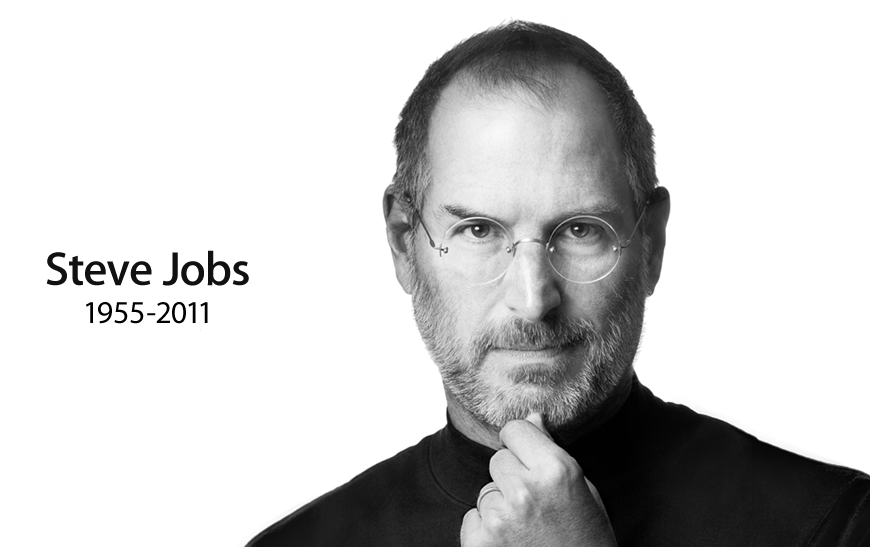
Why Steve Jobs mattered to us.
Steve Jobs' death is being mourned worldwide because he changed the world. He democratized technology. He liberated it to do good. Most importatnly, he brought optimism, creativity and joy to the lives of ordinary people.
 His passing is particularly saddening for people in creative professions, and within the agency world in particular. His impact upon people in our industry extended well beyond the power of his products to inspire and enable creative expression. Steve meant more to us than that.
On the surface, we admired his creative instincts - in the design of his products and in the campaigns he approved.
Perhaps we looked up to him as the archetypal client. Those who worked with Steve say he was tough and demanding, but always in pursuit of greatness.
And, maybe, just maybe, on a deeper and more personal level, we wanted to see a bit of ourselves in Steve Jobs and identify with him as a kindred spirit - one of the dreamers; the crazy ones; the few people in corporate America who dared to think different.
We can honor Steve Jobs' legacy by honoring his standards. Don't accept anything less than great, because life is too short to be merely average.
 His passing is particularly saddening for people in creative professions, and within the agency world in particular. His impact upon people in our industry extended well beyond the power of his products to inspire and enable creative expression. Steve meant more to us than that.
On the surface, we admired his creative instincts - in the design of his products and in the campaigns he approved.
Perhaps we looked up to him as the archetypal client. Those who worked with Steve say he was tough and demanding, but always in pursuit of greatness.
And, maybe, just maybe, on a deeper and more personal level, we wanted to see a bit of ourselves in Steve Jobs and identify with him as a kindred spirit - one of the dreamers; the crazy ones; the few people in corporate America who dared to think different.
We can honor Steve Jobs' legacy by honoring his standards. Don't accept anything less than great, because life is too short to be merely average.
Design as a competitive advantage.
Fast Company's cover story on design ("The United States of Design") is a must-read for any business leader looking to find a sustainable source of differentiation. Its central point is that design's strategic value is not just in improving the product offering but in rethinking the entire way businesses operate.
 I've written on several occasions about the value of embracing design thinking as a business discipline, not as an aesthetic process. Design thinking forces executives to view the world from the customer's standpoint. It focuses on the overall experience and not just the tangible product. It requires reductive thinking. All of which are extremely healthy business practices, not design practices.
Design as a business strategy and source of differentiation was embraced years ago by early adopters like Hermann Miller, Apple, Kohler and Target. Now companies as diverse as McDonalds, 3M, Black and Decker, Jawbone and Method are following suit.
As Fast Company points out, the value and power of design is misunderstood in many companies. In fact, David Butler, coke's head of global design, jettisoned the squishy D-word and instead talked about how his team can "make stuff better."
Fahrenheit 212's Mark Payne notes that "design is differentiation made visible, visceral and experiential." Well put.

Design as a business strategy and source of differentiation was embraced years ago by early adopters like Hermann Miller, Apple, Kohler and Target. Now companies as diverse as McDonalds, 3M, Black and Decker, Jawbone and Method are following suit.
As Fast Company points out, the value and power of design is misunderstood in many companies. In fact, David Butler, coke's head of global design, jettisoned the squishy D-word and instead talked about how his team can "make stuff better."
Fahrenheit 212's Mark Payne notes that "design is differentiation made visible, visceral and experiential." Well put.
Subscribe to:
Posts (Atom)
How the Handover Begins
Today’s New York Times features an article that pulls back the curtain on how the AI handover is getting underway, how Google, Meta, X, et a...
-
 I don't know who authored this quote, but I found it in this video of a presentation Yves Behar gave at TED about the need for design t...
 -
 I was thinking the other day about the DNA of premium brands . One thing is certain -- it's a relative idea. For example, Hyatt is...
 -
 Today’s New York Times features an article that pulls back the curtain on how the AI handover is getting underway, how Google, Meta, X, et a...