Showing posts with label empathic marketing. Show all posts

What is your brand's "Fast Car?"


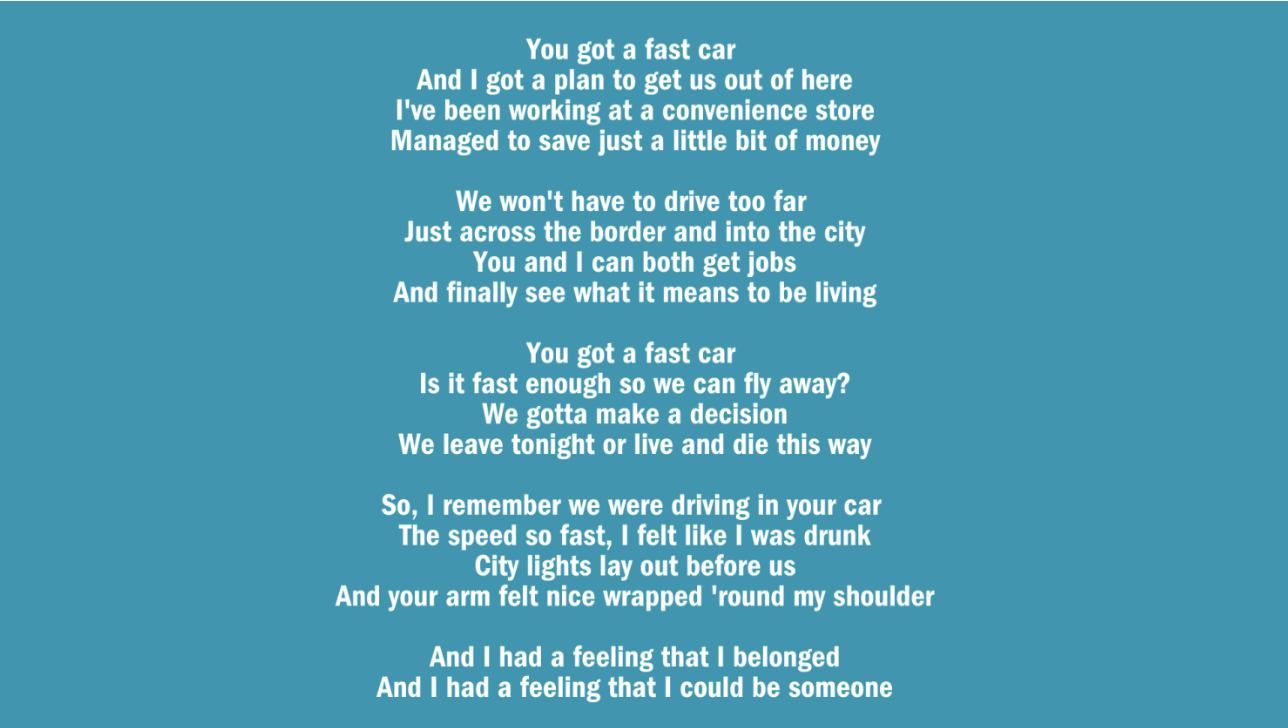
If you watched the Grammy Awards last Sunday, you saw an audience moved by Tracy Chapman and Luke Combs performing a duet of "Fast Car." Or dial up the YouTube and watch her 1988 performance at Wembley Stadium where the unknown artist was asked to fill time when Stevie Wonder's set was delayed by a technical malfunction, and watch that song quiet a massive and restless crowd.

Why? Because "Fast Car" touches the marrow of our universal human experiences and needs. It's an example of the power of truly understanding people, and the risk of not.

Recently, pundits and politicians have been scratching their heads, puzzled why people don't agree with the data that shows the strength and resilience of the economy. To me, this is just another example of not seeing the people behind the data (in this case, the daily reality of working-class people and towns that Tracy Chapman wrote about).

Empathy is a powerful tool for marketers to better understand people. There are many research methodologies we can use to understand human context by exploring attitudes, values, and mindsets.


There is also the unparalleled value of first-hand observation — venturing into the customer’s world, standing in their shoes, seeing life through their eyes to find authentic ways to demonstrate how your brand sees and hears them. (When I worked with Ford at WPP, I admired the commitment of the Ford Truck team to spend time at rodeos, races, job sites talking with people, getting to know them and their needs. It is little surprise that the F-150 is America’s top selling vehicle.)

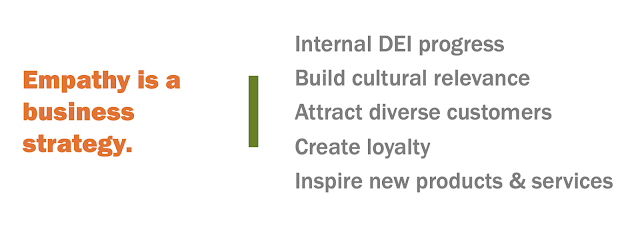
Each time I teach the Rehumanize brand growth system at UC Irvine and Loyola Marymount, or in workshops at companies such as Genesis Bank or Bastion, one of my first declarations is that empathy is a squishy sounding growth strategy — a way to form tighter bonds with loyal customers; inspire new products and services; understand an increasingly diverse marketplace.

Which brings me back to Tracy Chapman’s song.  Is your brand strategy grounded in an honest and empathetic insight? Can you describe your customer's world as intimately as you could that of your oldest friend? Does it tap into their hopes while also understanding the barriers they confront?

What is your brand's "Fast Car"?

What Marketers Can Learn from "The Big Short."

The Big Short is more than a story about the 2007 mortgage crisis - it’s a cautionary tale about the peril of not understanding the human context behind data.  


Mark Baum, the investor played by Steve Carell, had his team gather first-hand insights to uncover what the raw data was hiding from others. They went out and talked to people on the front lines — the shady mortgage brokers; the compromised ratings agencies; the “nightclub” worker who owned five homes; the father who had dutifully paid his bill yet was about to lose his home — before deciding to short the Collateralized Debt Obligations that would soon turn toxic.  They invested the time to understand the human context — behaviors, motivations, beliefs.


What purely data-derived assumptions do we have about customers.  Do we understand how they feel and why they do what they do? 


This is the question I’ll be posing to students as I share the Rehumanize platform during my upcoming university lectures at California State-Fullerton, Loyola Marymount University, and the University of California-Irvine’s Merage School of Business. 


With empathy at its core, Rehumanize is a brand growth system modeled on the four dynamics of human relationships. Its “4Es” framework connects insights, goals, tactics, data and enterprise-wide collaboration to form a human-centered growth strategy.

Let's rehumanize marketing!


Every new marketing model seems to move farther from a fundamental truth – there’s a human on the other side of the screen.

We can sense this growing chasm in marketing's increasingly de-humanized vocabulary – addressable markets, cohorts, targets, segments; we can sense it in blunt, one-size-fits-all multicultural definitions and generational tags.

Despite being awash in data and analytics that tell us what customers did, most companies don’t fully understand why their customers behave the way they do.   


A Harvard Business Review Analytical Services study found that just 23% of executives believe their organization understands their customers’ motivations. (Even if this has doubled since 2019 that's still not great.)

Customer Experience, or CX, comes closest to embracing a human-centered truth. Yet here we are in 2023 and CX remains siloed in many organizations. 

Being human-centered is not about going analog. Far from it! Data and marketing technologies have given us superpowers in our ability to be more relevant and personalized.


This is about shifting our mindset – making empathy a core skill; designing more human-centered ways to organize teams; truly understanding what it means to have a relationship with a customer.

Being Human: 101

In my recent university lectures, I speak to students about human behavior and the power of empathy. With a clear nod to Abraham Maslow, here’s how I summarize for them our basic human motivations:

We create relationships as a way to help satisfy these needs, and the strongest begin are sustained through empathy – the ability to see through the eyes of another, without judgement. Empathy helps form meaningful relationships because it builds trust.

If this is true in life, why isn’t this consistently true in marketing?

Prioritizing the “R” in CRM

Several years ago I realized the mistake I had long been making.

While giving a presentation I noticed I was repeating the word relationship on slide after power-pointy slide, e.g., customer relationship, brand relationship, CRM. I hadn't yet invested time to unpack this simple word to understand the dynamics of real relationships.

That “ah-ha moment” helped crystalize a simple truth: what’s true in life should be true in marketing – how we form personal relationships should guide how we form customer relationships.

And that truth ultimately inspired Rehumanize, a marketing consultancy that helps organizations and people grow by harnessing the power of empathy and human relationships.


Rehumanize organizes goals, metrics, and teams around the four dynamics of human relationships – empathy, experiences, endorsement, and energy – aka, "The 4Es."


Connecting the Dots

Rehumanize's 4E Loyalty Model represents System Thinking – i.e., a way to make sense of complexity by viewing a problem in terms of wholes and relationships rather than its parts. In this case, the "whole" is the dynamics of human relationships.

This is what differentiates the 4E model from CX and CRM. Unlike those strategies, 4E integrates the contributions of other disciplines such as media communications, social media, event marketing, influencer strategies, product development, etc.

4E connects the dots across the enterprise – the benefit of systems thinking – to create a human-centered model to organize and analyze data, plan and prioritize strategies, and foster collaboration across teams.

Designing a human-centered organization sounds daunting, yet the necessary data, resources and skills likely already exist in your company but are disconnected from each other.

The 4E Loyalty Model is underpinned by the metrics we use every day, but live in different organizational silos, scattered across disparate reports, discussed in separate meetings.


When seen through the 4Es, these metrics realign to paint a clear picture of the opportunities, progress, and work to be done.


Teams in Marketing, Behavioral Analytics, UX/CX, Customer Care, Product and Corporate Comms all contribute. 4E creates a common vocabulary, shared planning model, and aligned KPIs.


Empathy is a business strategy

Empathy may sound soft, but 4E is a measurable, outcome-oriented system that align goals, analytics and action.

Empathy helps accelerate progress on DEI initiatives; it can build authentic cultural relevance and growth among diverse customers; it can strengthen the effectiveness of a company’s CRM investments; it helps inspire new product development.

Spiderman and Maya Angelou agree.

While it’s true that Big Data and Martech have given us marketing superpowers, it’s also true that “with great power comes great responsibility” (as Uncle Ben advised Peter Parker, aka Spiderman).

Our responsibility is to use human insights, data and technology to better serve customers – to help organizations and people grow by harnessing the power of empathy and human relationships.

Marketing leaders have always had to hold in their mind two seemingly contradictory ideas: Marketing is about customer empathy; marketing is about profitable growth.

Each statement is true. Each is less effective without the other.


And here, I step aside and let Maya Angelou summarize my 29 paragraphs in 22 words.


The Future of Marketing is Human.


-->


A while back I visited the Museum of Failure in Los Angeles. Seriously, this is a real thing–– a pop-up museum showcasing decades of really bad marketing ideas. My personal favorite? Gerber Singles––meals in a jar targeted at young adults who didn’t have time to cook. And as we know, nothing says your life sucks more than eating dinner in a jar…from a baby food brand.

This experience jolted me into thinking about how marketers, no matter how well-intentioned, can become better equipped to embrace change and avoid being showcased in the Museum of Failure.

We’re living in a period of unprecedented change. Massive demographic shifts. Shifting cultural norms. Media fragmentation. New technologies. The power of data. Low barriers to entry. New business models disrupting the status quo. 

Change is simply the new normal. The marketers that succeed will be those that quickly adapt, developing the skills to rapidly test, learn and iterate. Being open to change isn’t a best practice, it’s a survival skill. (As has been said, if you don’t like change, you’ll like irrelevance even less!)

The most exciting part of where marketing is heading is what we are returning to. We’re moving past the phase of being dazzled by shiny new marketing technologies, applying them simply because we can. We’re remembering that on the other side of that screen, those VR goggles, or holding the mobile app…there is a human being. 

Human Centered Design, and by extension, Human Centered Marketing, starts with genuine empathy. Human centered marketers don’t draw inspiration from the latest technologies. They draw inspiration from people. They develop an empathetic understanding of their journey, needs, and aspirations.

This is not about going analog. Far from it! Data and marketing technologies give us more ways to be more relevant and personalized to customers. Addressable TV enables us to use Mass Media as 1:1 marketing. First party data segmentation enables us to personalize at scale. Machine Learning helps technology be more intuitive. (Just ask Alexa.) Data provide the ability to better understand people––how they’re alike, how they’re unique, how we can help them.

But we know, too, that there is a dark side to technology, to social media, to seeing humans as algorithms. We are witnessing an erosion of trust concurrent with an increase in isolation, social bubbles, and stress.

This is why I've embraced a simple truth: what’s true in life should be true in marketing. If a marketer hopes to build lasting customer relationships, it must first earn the customer’s trust. Empathy is how we build trust in our personal relationships. So, too, in marketing. 

Empathy is different than being customer driven. (Hey, simply being customer driven leads to dinners in a jar for time-starved young adults!) Empathy is the ability see the world through another person’s eyes…to truly understand their experience by standing in their shoes.

Practitioners of Human Centered Design start by putting aside preconceived ideas and instead focus on understanding the people they are designing for. It involves discovering what people are trying to accomplish; how they want to feel; their unarticulated needs; their pain points. Successful marketers increasingly understand that true customer empathy is a source of differentiation.

We see signals pointing to the future of marketing in many of the disruptive marketing frameworks that take a human centered approach to helping people accomplish goals. 

Direct-to-Customer Marketers such Casper, Warby Parker and Carvana are disrupting categories by uncovering unarticulated needs and designing new experiences that are convenient, friction-free and personalized. (DTC marketers have the added advantage of capturing 1st Party Data, enabling them to maintain ongoing relationships with their customers.) 

Subscription Marketers, similar to DTC brands, solve real customer pain points yet have the added benefit of continuously learning how to personalize the experience. Stitch Fix learns more about its customers each month based on what clothing they return or keep. Netflix uses machine learning to understand what we like to binge. And in a surprising move, John Hancock recently announced it will only underwrite “interactive insurance” policies for customers who agree to share health data from their wearable device. (Subscription models have a huge financial benefit to these marketers, generating a more predictable revenue stream and greater lifetime value per customer.)

Mobile 1st Marketers use mobile as a business strategy, not a media channel. Mobile 1st businesses apply Human Centered Design to understand the customer journey, especially the unarticulated pain points, and use mobile to help people accomplish tasks. Delta has done a brilliant job of this, even down to solving the latent anxiety felt by many travelers who worry whether their bag was successfully loaded on the plane. Domino’s is also embracing a Mobile 1st approach, not just with their Pizza Tracker, but now with the launch of Domino’s Hot Spots nationwide.

Purpose-Driven companies are human centered, but in a different way. Brands such as Tom’s, Chobani and Dove aren’t listening to customers to figure out how to be more relevant. They are guided by a clear sense of purpose about making the world a better place. They operate as a force for positive change and attract people who share that same belief. (Research increasingly shows a growing number of customers will consider a brand’s stand on social issues before making a choice.)

As I said at the start, change is simply the new normal. The most exciting change in marketing is how, in an increasingly digital age, we are returning our focus to the human experience. We’re remembering a timeless human lesson: To build lasting customer relationships, we must first earn the customer’s trust by designing experiences inspired by genuine human empathy.

Because what’s true in life, is true in marketing.

How the Handover Begins

Today’s New York Times features an article that pulls back the curtain on how the AI handover is getting underway, how Google, Meta, X, et a...