Showing posts with label interactive marketing. Show all posts
Showing posts with label interactive marketing. Show all posts
How digital video changes story telling.
Thought provoking discussion on how storytelling differs between TV and digital video. This goes deeper than length. It's about breaking free from the traditional closed loop story arc (having a beginning, middle and end) to a more open ended storyline.

What we're doing online.
Great infographic. It is mind-blowing to see the change in our online behaviors and growth of new platforms in just three years.
 |
| source: BusinessInsider.com |


Marketing as a service.
What if we re-imagined marketing as a way to serve customers? What if we designed it as a way to provide real-time value and utility to customers?
Our SXSW panel at explored these issues and more. Marketing as a service harnesses Big Data to provide more meaningful and helpful experiences for customers. It is a principle born of the belief that the dynamics of customer loyalty have fundamentally changed. Loyalty can no longer be solely defined by customers staying loyal to a brand. Because the internet provides us with unlimited choice, the tables have turned – brands must now demonstrate their loyalty to customers by serving them.
Our SXSW panel at explored these issues and more. Marketing as a service harnesses Big Data to provide more meaningful and helpful experiences for customers. It is a principle born of the belief that the dynamics of customer loyalty have fundamentally changed. Loyalty can no longer be solely defined by customers staying loyal to a brand. Because the internet provides us with unlimited choice, the tables have turned – brands must now demonstrate their loyalty to customers by serving them.
The audience has an audience.
Here's the video of my speech to the 4As conference last week.
Marketers must remain relevant at a time in which consumers are themselves the broadcasters, sharing content with their own audience via social, mobile and online channels. By adopting a brand syndication model, with the persuasive power of video's sight, sound and motion at its core, marketers can authentically join the conversation.
Marketers must remain relevant at a time in which consumers are themselves the broadcasters, sharing content with their own audience via social, mobile and online channels. By adopting a brand syndication model, with the persuasive power of video's sight, sound and motion at its core, marketers can authentically join the conversation.
What leading CMOs are thinking about.
CMOs are beginning to last longer in their jobs. Executive search firm Spencer Stuart reports that CMO's are staying in their post an average of 45 months, a marked increase from 2005 when the average tenure was only 23.5 months.
So why the increase in job security? I am seeing more and more senior marketing leaders focussing on enterprise marketing solutions, not just branding strategies. CMOs are getting closer to their customers through Big Data, digital technologies, multicultural trends, and more contemporary media strategies. They are working more closely with their company's CIO to develop smarter, data-driven strategies. This is a welcome change from the days when a new CMO would put their stamp on the company by firing the agency and developing yet another advertising campaign.
The new CMO agenda is focused on four big questions:
- How can data and analytics help optimize my company's marketing investment and mix? How do we embrace Marketing Cloud solutions to get more accurate marketing attribution?
- How fast can we become a "mobile-first" marketing organization to get even closer to our customers, one that embraces "mobile as a service"?
- How can we better engage customers who are tuning out of mass media? Can we lessen our dependence on big campaigns and instead re-imagine marketing communications as an always-on, content publishing discipline?
- How can we build a coalition of growth by serving our core customers as well as an increasingly multicultural America?
The future of advertising is in Motown.
 If you're looking for the future of advertising you will likely find it at the intersection of real time analytics and custom content creation.
Team Detroit, Ford's global marketing communications agency, is putting this to work today for the launch of the 2015 F-150 – revealed this morning at the North American International Auto Show.
Our Content Studio combines the talents of our analytics, strategy and creative teams collaborating side-by-side with Ford's marketing team (which also includes real time legal input). Walking through the room feels more like a news room than an advertising agency, and that's the point. The team's goal is to use real time social sentiment analysis to inspire custom content that responds to the conversation surrounding the launch, thereby amplifying the impact of social media and public relations messaging.
Cord cutters, aka, the death of TV.
This article from Business Insider provides a clear and fact-based analysis of the upheaval in the TV/cable industry as more and more Americans cut the cord and instead get their video fix via broadband, through services such as Netflix, Hulu, Apple TV, Aereo, ABC.com, et al. This massive change in media consumption patterns is the bi-product of new generational trends, broadband, economics and, of course, the declining quality of network television programming. (As the great poet Springsteen sang, "57 channels and nothin' on.")
Here are Business Insider's major conclusions:
Here are Business Insider's major conclusions:
- People are unplugging.
- Cable TV ratings are sinking.
- Fewer people are watching TV.
- Ratings for some major TV events are in decline.
- For the first time ever, the number of cable TV subscribers at major providers is about to dip below 40 million.
- Cable and broadband companies are increasingly unable to retain customers.
- For the first time ever, less than half of subscribers at major broadband companies now subscribe to cable TV.
- Fewer households actually have TV.
- Few households have TV because they are watching video on mobile devices instead.
- Mobile video is booming.
- Tablets are stealing prime time, the period we used to devote to TV.
- Ad dollars are following eyeballs, shifting from TV to digital media of all kinds.
- Ad revenue increases are masking the macro decline in TV.
- People who are unplugging from both Cable TV and broadband internet are likely going to free wifi.
Beautiful storytelling.
This online film series from Intel and Toshiba brings together so many powerful elements – the power of storytelling, the acknowledgement that digital media is a powerful branding platform, and the energy and momentum we can create when we let the audience own, personalize and share the message.
Ideas like "The Beauty Inside" are what inspire me to work in this business.
Is Facebook fatigue setting in?
Yes, according to a new study from the Pew Research Center. Some highlights:
- 27% of Facebook users in the US who were surveyed reported that they plan to reduce the amount of time they will spend on the site.
- The study found that 61% of Facebook users have taken a break from the site for several weeks or more.
- A lack of time and interest seem to be driving this trend.
Social media demographics.
We're beginning to get a better understanding of who is using social media, thanks to new research studies such as the one released recently by the Pew Research Center (and published in Adweek). Some highlights from the Adweek article:


- Two-thirds of internet users engage in some form of social media, with Facebook being the dominant platform.

- Women are more likely than men to use social media, and are five times more likely than men to use Pinterest:

- When in comes to ethnicity, Blacks and Hispanics are more likely than Whites to use Instagram and Twitter.

- Not surprisingly, social media uses is highest among 18-49 year old internet users. Among the 50+ segment, Facebook by far the preferred platform.

- Level of education doesn't seem to drive social media usage overall, but it does seem to influence the relative choice of platform.

The second screen revolution.
Today Twitter announced that it bought Bluefin Labs, a software company that analyzes online conversations about television programming. Here's why.
A decade ago pundits predicted that the battle for Interactive TV would be won by whichever company owned the set top box. Perhaps a Cable TV company, or Microsoft's Xbox.
This didn't turn out to be true. Like most bad predictions, we based our view of the future on what we knew in the moment. We didn't know what we didn't know. For example, in 2003 we did not know about Smartphones, Tablets and WiFi enabled homes. These three technologies have since conspired to bring about a new form of interactive television – second screen viewing.
Americans are increasingly watching TV while interacting with the content via a mobile device – aka, the second screen. We share our opinions about what we're watching on TV on Twitter and Facebook. We quickly research information about the product we just saw advertised.
A 2012 Nielsen research study shows that:
- 88% use a mobile device while watching TV.
- 45% use a mobile device to access social media during TV ads.
- 27% look up information about a product they just saw (slightly higher among women than men).
- Not surprisingly, this behavior is higher among teens that older boomers (62% vs. 33%).
The second screen revolution is prompting advertisers to rethink the old school call-to-action. Instead of inviting viewers to visit www.whatever.com, we are seeing a steady increase in calls-to-action to join a twitter conversation (via a #hashtag), to get deeper content by using Shazam to tag the commercial, or simply to visit the brand on Facebook, the website the viewer is likely already on as they're viewing the commercial.
Micro financing a car.
Some ideas are brilliant in their simplicity. The Dodge Dart Registry is one of those ideas.
The website allows prospective Dart buyers to get friends and relatives to help fund the car. It elegantly intersects several existing behaviors and cultural dynamics: It is grounded in the familiar behavior of gift registries, then adds new dynamics from the worlds of microfinancing and social graphs.
Buyers start by configuring the car. Then they set a funding goal. Finally, they push the registry out to friends and family who can choose to fund the wheels, sound system, leather upgrade, etc.
Instead of innovating new message to tell me why I want a Dart, Dodge opted to innovate new ways to make it easy and fun to buy a Dart. Proof that the path to getting to a new answer often starts with asking a different question.

Digital trends in 2013.
This time of the year always brings a surfeit of predictions and prognostications. Having said that, I do believe this Adweek story does a good job pointing us toward the larger events on the interactive marketing horizon.
I continue to believe that the future of interactive is inextricably linked to the future of mobile. Two themes in the Adweek story, should they fully materialize, have the potential unlock mobile's true marketing value: "second screen" viewing and mobile payments.
And while thinking about the future of mobile, check out this demonstration of Blippar, a platform that may make QR codes seem quaint in due time.
Marketing's new normal.
Today I had the opportunity to be the guest speaker at Chapman University's Internet Communications class. Cory O'Connor, the Assistant Professor who extended the invitation, knows a thing or two about shaping strong brands, having been Sr. VP for the Disney Channel.
My goal was to outline a few themes that have bounced around this blog, particularly that marketing communications professionals should embrace marketing's new normal by eschewing tired distinctions between "online" and "offline", "traditional" vs "nontraditional", as well as my favorite old school term – "new media." Further to my crusade to simplify planning by stamping out jargon, brand pyramids and Venn Diagrams, I also outlined my simple belief that what is true in life is true in marketing – i.e., they way in which we form personal relationships mirror how we form brand relationships.
Re-imagine your website as a branded newsroom.
Ian Schafer's article prompts an interesting idea.
Normally we design websites to get people to visit the brand. What if we changed the goal and instead designed a website programmed around socially shareable content?
By "programming" Mr. Shaffer is suggesting that we keep the content fresh and interesting on a daily basis, similar to the continuous editorial decisions made at an entertainment news website or TV network.
This would require that the website be led by an editor-in-chief charged with making daily content decisions about news/videos/tips that will increase the brand's chances of being shared within social networks. Like the article suggests, the website would be run like a newsroom.
Love ideas such as this that totally reframe a problem.
Nostradamus and social media

This may or not be true. I don't know. I'm not sure even the great 16th Century seer could give us guidance.
However, I do believe that the way in which we'll use this medium in the future will be very different than how we're using it today. It will evolve in ways we cannot yet see, and in doing so will become more useful for marketers.
Why do I believe this? Sometimes the past can give us a clue to the future.
Back in the late '90s, and even in the early 2000s, the way in which agencies and marketers used the web bears no resemblance to the way in which we're using it today. First of all, dial-up was the dominant access method, so it was unrealistic to use rich images and long-form video (the dominant form of interactive marketing today). Second, we were very inexperienced in this new medium, so we treated the web as a one-way, broadcast version of a brochure.
Back in the 2000s, there were breathless predictions about the advent of interactive television. The battle for control over this new form of marketing was being defined by the set-top box – the source of viewer interaction. Or so we thought, until recently when we began witnessing the emergence of "second-screen" viewing, in which viewers interact with broadcast content through a smartphone, tablet or laptop.
In the case of the web, we couldn't see a near future in which broadband would change the online experience, and how the web would evolve from a broadcast medium into a service channel. And as for interactive television, we didn't see the iPhone coming.
The moral of the story is that we should not define a medium's future potential based on our current practices and the current state of its technology.
So will social media evolve into a powerful marketing platform? Probably. But not in the form in which it exists today. Savvy agencies and marketers will test, learn and be ready for what comes next.
Oh, in case you're wondering, @Nostradamus has 1,449 followers.
Social TV: second-screen viewing
Since my recent post on how the Super Bowl mainstreamed Social TV, I read the announcement that Turner Entertainment is creating companion apps to enable second-screen viewing for its hit shows like Conan and Big Bang Theory.
 These apps will use audio-fingerprint technology, similar to Shazam, to offer viewers deeper content and offers that correspond with the action in the program. The trend toward second-screen viewing recognizes that TV viewers are increasingly watching TV with the remote in one hand and the smart phone or tablet in the other.
The dream of interactive TV is alive and well. However, unlike the early prognostications that viewers would interact with the TV screen through their set top box, the interaction is likely to take place through the ever present smart phone.

The dream of interactive TV is alive and well. However, unlike the early prognostications that viewers would interact with the TV screen through their set top box, the interaction is likely to take place through the ever present smart phone.
The mainstreaming of Social TV.
The 2012 Super Bowl set a new high water mark for Social TV.
TV has long been a personal experience, perhaps shared in real time by one or two fellow couch potatoes in your den or the following morning with co-workers.
Social media has changed that. Now TV is shared in real time with friends and strangers who share your passion for Grey's Anatomy or SNL. This trends blows up during major events.
According to Bluefin Labs, the 12.2 million social media comments during and after the Super Bowl represented a 578% increase over last year. During the final three minutes, tweet volume was about 10,000 tweets per second. There were 985,000 comments about the commercials alone. (That's wikibranding in action.) H&M/"Beckham", Chrysler/"Clint", and Doritos/"missing cat" led this conversation.
A couple of smart marketers recognized this by integrating a social aspect into their Super Bowl promotions. Chevy offered an app to use during the game as part of a real time car giveaway. Coke let viewers stream the Polar Bowl and watch the bears react in real time to the game and the commercials.
Social TV requires that we plan a conversation, a social experience, not just a campaign. Yes, we want to reach our audience. But then what? Enable the conversation with social tools. And, as always, inspire the conversation with a killer creative idea.
Gaming as a form of strategic marketing.
We've all seen the brief: raise awareness, shape new customer behaviors, launch a new product and generate revenue.
Historically, this brief has been answered through an advertising campaign. But in a world in which collaboration and experiences often trump one way communications, gaming is fast becoming a bankable marketing strategy.
A while back I attended a thought-provoking presentation by Dr. Jane McGonigal, a leading game designer and researcher, about the social benefits of gaming. Dr. McGonigal believes that gamers exhibit four personality traits that are essential for problem solving:
- urgent optimism
- social collaboration
- blissful productivity
- epic meaning
Perhaps inspired by Albert Einstein's quote – "Games are the most elevated form of investigation." – her work focuses on ways to harness gamers' collective intelligence and creativity to solve societal challenges, such as imagining a world without oil, or new ways to bring water to sub-Saharan Africa.
Now companies are embracing gaming as a business strategy. Within the past few months I've witnessed B2B gaming initiatives from IBM, Cisco, GE, SAP and Microsoft. Each is using gamification to engage customers in a deeper brand narrative, or to train sales people.

BD'M used gamification to help United Airlines sell its new suite of Travel Options. We designed a game around each Travel Option – e.g., Line Jump Hero, Legroom Legend, Mileage Ace – that could be played online or on smart phones. After being played over nine million times and generating millions of dollars in incremental revenue for United, The Mobile Marketing Association named the Optathlon games the best mobile promotion in 2011.
This new presentation by PSFK provides a thorough and clear case for gaming as a business strategy. Gaming has the potential to communicate; to teach; to solve; to alter behavior; to raise money. It does so through its unique ability to tap into peer competition and one-upsmanship; stakes and rewards; exclusivity and access.
Subscribe to:
Posts (Atom)
How the Handover Begins
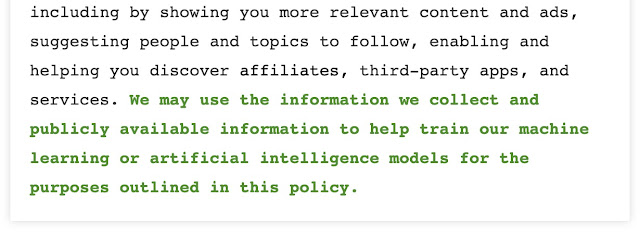
Today’s New York Times features an article that pulls back the curtain on how the AI handover is getting underway, how Google, Meta, X, et a...
-
 I was thinking the other day about the DNA of premium brands . One thing is certain -- it's a relative idea. For example, Hyatt is...
-
 I don't know who authored this quote, but I found it in this video of a presentation Yves Behar gave at TED about the need for design t...
-
 Today’s New York Times features an article that pulls back the curtain on how the AI handover is getting underway, how Google, Meta, X, et a...