The Wall Street Journal's small business innovation competition shows how businesses can succeed in a poor economic climate by using the realities of the marketplace as a source of new business models and product offerings.
This made me pause to think about our small business, Barrie D'Rozario Murphy. Starting an agency on the eve of the Great Recession is a focusing experience. And while we were named in 2009 by the 4As as the "best small agency in the U.S.", we believe we've gotten better since because we started rethinking what marketers need from an agency.
Our clients needs ideas – not just TV ideas; not just print ideas; not just banner ad ideas. They need the best solution for the problem at hand. Any agency that specializes in one solution, whether that is TV or interactive or social media, is the proverbial hammer that views all problems as nails.
We deepened our commitment to being an agency with "no walls." No walls between us and our clients; no walls between us and other partners working for our clients; no walls preventing us from discovering new and innovative partners that can help our clients succeed; no walls between people of different disciplines.
"No Walls" has inspired us to design smart phone games to sell a la carte travel options for United Airlines (using gamification as a powerful communications strategy). We created an extensive iPad app for Medtronic to tell its corporate brand story (the modern version of the :60 corporate branding effort traditionally reserved for Sunday morning news programs). We created social media savvy street teams to launch Best Buy's eBikes program (the new way to link local events to a larger audience).
And throughout this journey we haven't lost our advertising mojo, having created beautiful print, TV and promotional programs that have been recognized with Gold Lions in Cannes and EFFIE Awards from the American Marketing Association.
The morale of the story. Never led a good crisis go to waste. Rethink everything, and discover something even better.
Why Steve Jobs mattered to us.
Steve Jobs' death is being mourned worldwide because he changed the world. He democratized technology. He liberated it to do good. Most importatnly, he brought optimism, creativity and joy to the lives of ordinary people.
 His passing is particularly saddening for people in creative professions, and within the agency world in particular. His impact upon people in our industry extended well beyond the power of his products to inspire and enable creative expression. Steve meant more to us than that.
On the surface, we admired his creative instincts - in the design of his products and in the campaigns he approved.
Perhaps we looked up to him as the archetypal client. Those who worked with Steve say he was tough and demanding, but always in pursuit of greatness.
And, maybe, just maybe, on a deeper and more personal level, we wanted to see a bit of ourselves in Steve Jobs and identify with him as a kindred spirit - one of the dreamers; the crazy ones; the few people in corporate America who dared to think different.
We can honor Steve Jobs' legacy by honoring his standards. Don't accept anything less than great, because life is too short to be merely average.
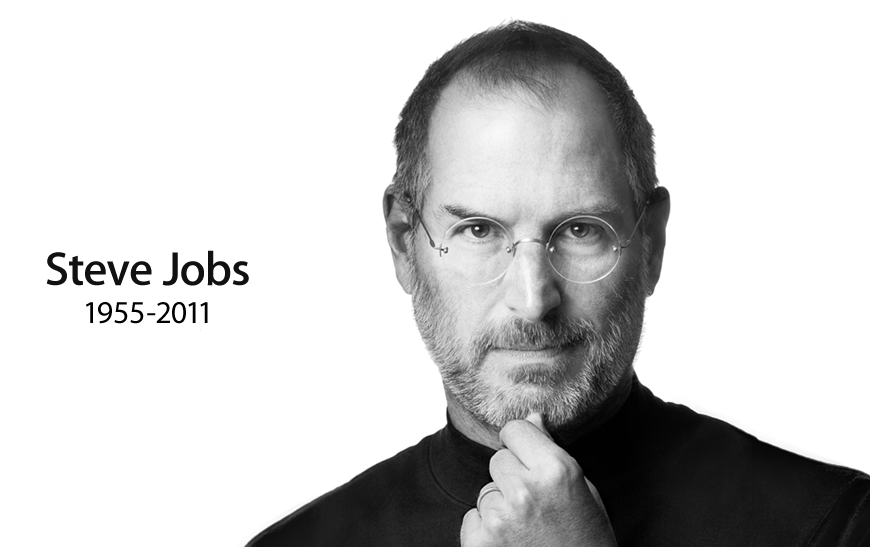 His passing is particularly saddening for people in creative professions, and within the agency world in particular. His impact upon people in our industry extended well beyond the power of his products to inspire and enable creative expression. Steve meant more to us than that.
On the surface, we admired his creative instincts - in the design of his products and in the campaigns he approved.
Perhaps we looked up to him as the archetypal client. Those who worked with Steve say he was tough and demanding, but always in pursuit of greatness.
And, maybe, just maybe, on a deeper and more personal level, we wanted to see a bit of ourselves in Steve Jobs and identify with him as a kindred spirit - one of the dreamers; the crazy ones; the few people in corporate America who dared to think different.
We can honor Steve Jobs' legacy by honoring his standards. Don't accept anything less than great, because life is too short to be merely average.

Design as a competitive advantage.
Fast Company's cover story on design ("The United States of Design") is a must-read for any business leader looking to find a sustainable source of differentiation. Its central point is that design's strategic value is not just in improving the product offering but in rethinking the entire way businesses operate.
 I've written on several occasions about the value of embracing design thinking as a business discipline, not as an aesthetic process. Design thinking forces executives to view the world from the customer's standpoint. It focuses on the overall experience and not just the tangible product. It requires reductive thinking. All of which are extremely healthy business practices, not design practices.
Design as a business strategy and source of differentiation was embraced years ago by early adopters like Hermann Miller, Apple, Kohler and Target. Now companies as diverse as McDonalds, 3M, Black and Decker, Jawbone and Method are following suit.
As Fast Company points out, the value and power of design is misunderstood in many companies. In fact, David Butler, coke's head of global design, jettisoned the squishy D-word and instead talked about how his team can "make stuff better."
Fahrenheit 212's Mark Payne notes that "design is differentiation made visible, visceral and experiential." Well put.

Design as a business strategy and source of differentiation was embraced years ago by early adopters like Hermann Miller, Apple, Kohler and Target. Now companies as diverse as McDonalds, 3M, Black and Decker, Jawbone and Method are following suit.
As Fast Company points out, the value and power of design is misunderstood in many companies. In fact, David Butler, coke's head of global design, jettisoned the squishy D-word and instead talked about how his team can "make stuff better."
Fahrenheit 212's Mark Payne notes that "design is differentiation made visible, visceral and experiential." Well put.
What makes a premium brand premium?

One thing is certain -- it's a relative idea. For example, Hyatt is not a premium brand if you're used to staying at a W or a Ritz Carlton. But if your vacations to date have been holed up in a Holiday Inn, then by all means a stay in a Hyatt is a premium experience.
Another thing is certain -- a brand is considered premium only when we believe it is worth the price. And that's where we can dig deeper. Why are we willing to pay more for a product when there are others that provide the same service or function at a lesser price?
I have spent a good part of my marketing career developing strategies and ideas for a wide range of premium brands, including American Express, Sony, Callaway Golf, Hilton, Jaguar, Land Rover – even the Toyota Prius. Through these experiences I have come to believe that a premium brand is built upon specific tangible and intangible attributes that give it a sense worth:
- Sensual – It arouses our senses and feels indulgent. It is an experience. We want to touch it; we enjoy looking at it. (Think about Steve Jobs' obsession on how a iPhone should feel in your hand, or how Jet Blue orchestrates a total sensory experience – from snacks to entertainment – to set itself above the fray in a fiercely competitive category.)
- Mysterious – It draws us in deeper and reveals more to us over time. We are intrigued to learn its back story. (Witness how Land Rover cultivates its image as a global trekker to set it apart from the herd of grocery-hauling SUVs.)
- Rare – It represents a discerning choice, intriguing because it is uncommon. (Audi has cultivated this particularly well – the thinking person's alternative to BMW and Mercedes.)
- Confident – It projects a feeling of intrinsic worth. (Burberry didn't ask permission to transcend its classic trench coat. It confidently asserted its plaid on to a wide portfolio of products and dared us to question its right to do so.)
- Authentic – It knows its "true north" and remains committed to this ideal. (Ritz Carlton's premium experience is a direct result of its mission statement – "ladies and gentlemen serving ladies and gentlemen. " With this simple ethic, the hotel's employees know exactly the business they are in and how they should serve customers. )
- Quality – It is consistent and shows obsessive attention to detail. (Tiffany understands the premium cues conveyed by a detail as simple as a white bow on a blue box.)
Managing a premium brand is one of the most difficult challenges in marketing. Like any business, premium brands must pursue growth strategies. However, unlike many mainstream businesses, premium brands must do so in a way that doesn't dilute the brand's image or the user's sense of exclusivity and pride. Certain strategies are off-limits. Brand managers for premium brands must know when it is best to pass on short-term growth opportunities that could tarnish the brand's long-term health.
Marketing a premium brand demands that we think through every facet of the brand experience. Packaging matters. The choice of materials and lighting in the lobby matters. Attentive customer service matters. And within the company itself, culture matters. Culture is often the alpha and omega of successful brands – particularly in the case of premium brands.
NOTE: This is updated from an earlier post.
Marketing a premium brand demands that we think through every facet of the brand experience. Packaging matters. The choice of materials and lighting in the lobby matters. Attentive customer service matters. And within the company itself, culture matters. Culture is often the alpha and omega of successful brands – particularly in the case of premium brands.
NOTE: This is updated from an earlier post.
Is digital killing luxury brands?
Oddly enough, this is not a question that's keeping me awake – it's one recently posed by Adweek. I'm writing this because I disagree with the article's central premise: the web's democratizing power might weaken a luxury brand's cachet.
The article suggests that most luxury brands were slow to embrace "new media" because the web makes brands too accessible. (By the way, if you want to make a 30 year old laugh, refer to the web as "new media.")
To address Adweek's question we need to tighten the vocabulary. I don't believe cachet comes from offering a luxury, it is about being premium. A brand is considered premium when we believe it is worth a higher price. That's how you measure cachet.
Certain brands compel us to pay more even when there are others that provide the same service or function at a lesser price. Previous wikiposts have explored this point. Having worked with brands such as Sony, American Express, Jaguar and Land Rover, I tend to believe premium brands are built on a core set of attributes that give them greater perceived worth – e.g., sensuality, rarity, confidence, authenticity, quality.
Brands are defined by creating an empathetic relationship with customers. Those brands that offer a premium lifestyle or image, in particular, are often defined by what they do, not just by what they say. In other words, it is our experience with the brand that helps define its worth. Part of Apple's worth is the retail experience; part of Nike's worth is its authentic and deep involvement with athletes at all levels; Land Rover's cachet is in part formed by the off-road test tracks at the dealership, and the fact that its showrooms feel more like an LL Bean store than a car dealer.
Given the importance of orchestrating rich experiences, no medium is better suited for this than the web (other than event marketing). Interactive platforms, whether a website or an app, offer the opportunity to inspire deep engagement, personalized experiences and highly emotional storytelling. These tactics can build mystery, exclusivity, a sense of authenticity and craftsmanship – the hallmarks of a premium brand.
The web's accessibility is not the point. A Burberry store in a mall is equally accessible. It is the experience that Burberry creates in its stores that makes it feel premium and exclusive. This same attention to detail when designing the in-store experience – e.g.,lighting, surfaces, wardrobe, signage, product displays – is required when designing an online experience.
The article suggests that most luxury brands were slow to embrace "new media" because the web makes brands too accessible. (By the way, if you want to make a 30 year old laugh, refer to the web as "new media.")
To address Adweek's question we need to tighten the vocabulary. I don't believe cachet comes from offering a luxury, it is about being premium. A brand is considered premium when we believe it is worth a higher price. That's how you measure cachet.
Certain brands compel us to pay more even when there are others that provide the same service or function at a lesser price. Previous wikiposts have explored this point. Having worked with brands such as Sony, American Express, Jaguar and Land Rover, I tend to believe premium brands are built on a core set of attributes that give them greater perceived worth – e.g., sensuality, rarity, confidence, authenticity, quality.
Brands are defined by creating an empathetic relationship with customers. Those brands that offer a premium lifestyle or image, in particular, are often defined by what they do, not just by what they say. In other words, it is our experience with the brand that helps define its worth. Part of Apple's worth is the retail experience; part of Nike's worth is its authentic and deep involvement with athletes at all levels; Land Rover's cachet is in part formed by the off-road test tracks at the dealership, and the fact that its showrooms feel more like an LL Bean store than a car dealer.
Given the importance of orchestrating rich experiences, no medium is better suited for this than the web (other than event marketing). Interactive platforms, whether a website or an app, offer the opportunity to inspire deep engagement, personalized experiences and highly emotional storytelling. These tactics can build mystery, exclusivity, a sense of authenticity and craftsmanship – the hallmarks of a premium brand.
The web's accessibility is not the point. A Burberry store in a mall is equally accessible. It is the experience that Burberry creates in its stores that makes it feel premium and exclusive. This same attention to detail when designing the in-store experience – e.g.,lighting, surfaces, wardrobe, signage, product displays – is required when designing an online experience.
Marketing's new normal.
There seems to be a steady stream of books offering breathless predictions about the death of advertising and, by extension, agencies.
I’ve recently come to believe that the Chicken Littles who squawk loudest about the perils of not embracing the new normal in marketing are secretly rooted in the past.
Good marketing professionals – marketers and agencies alike – realized this several years ago, adapted and got on with things. Successful companies tend to do this. Others don’t. They go out of business. Just as Mr. Darwin predicted. Moreover, the next generation of talent streaming into the marketing field are probably clueless as to what these authors are debating. If you want to make a 25-year-old ROTFL (whether they be a brand manager or a copywriter), refer to the web as “new media.”
Those who still go on about the how the business is changing do so because deep down they still use the wonder years of network television and national magazines as the yardstick by which to measure change.
The new normal banishes words like "traditional" and "nontraditional." Is a print ad with an embedded QR code traditional? Or how about bus board with a mobile call-to-action? You get the point.
The new normal doesn’t view "brand" through the narrow lens of a product’s TV or print campaign because consumers build brand impressions through a complex mix of first-hand experiences, peer opinions and, yes, intangible and emotional imagery.
The new normal views interactive media as a powerful brand-building medium because it has the ability to inspire deep engagement, expose customers to peer reviews and immerse customers in highly emotional brand narratives.
The new normal embraces media as a source of creativity, not as the pipes through which we beam ideas. The context in which we appear in a customer’s life is often as important as what we say.
The new normal embraces metrics, both hard and soft. Those who embrace only one set over the other will struggle. Ignore ROI or store traffic and nobody will care about the awareness gain. Likewise, click-through rates at the expense of relevance, differentiation and likability will not sit well when the brand degrades to commodity status. True professionals work hard to balance these seemingly conflicting goals, and that’s why they’re good at what they do.
The new normal also recognizes the business value of TV, print and radio. Good luck reaching C-Suite executives with a viral video, or my mom, for that matter, through Twitter. And let me know how efficient your street teams are relative to a spot on an NFL game in reaching millions of guys. When we close our eyes to the power and effectiveness of mass advertising, we are as blind as those who ignore the creative possibilities within social media or mobile marketing. True professionals embrace all forms of marketing and know when and how to deploy each.
So let’s just get on with it. The industry doesn’t need to change. It needs a good dose of creative destruction. Let market forces take their toll. Those who embrace the new normal will prosper. Those who don’t will not. Couldn’t be simpler. Don’t you love capitalism?
Where does your brand draw the line?
If you've read my earlier posts on brand narratives then you know I believe brands should invest as much time defining what they oppose as they do defining what they stand for.
 That's why I applaud Abercrombie's decision to pay the Jersey Shore to stop dressing its "stars" in A&F garb. Whether or not this is a genuine offer or merely a PR stunt is beside the point. What Abercrombie is doing is drawing a proverbial line in the sand so that its customers know the brand's point of view, taste and values.
Knowing what you stand for provides a clear sense of true north. Knowing what you oppose keeps brands focused, aligned and authentic. (Michael Porter has written that great strategy not only tells you what to do, but should also tell you what not to do.)
 That's why I applaud Abercrombie's decision to pay the Jersey Shore to stop dressing its "stars" in A&F garb. Whether or not this is a genuine offer or merely a PR stunt is beside the point. What Abercrombie is doing is drawing a proverbial line in the sand so that its customers know the brand's point of view, taste and values.
Why we declined United's invitation.
United Airlines announced yesterday that it selected McGarryBowen as its new agency of record after a lengthy review. We're happy for our friends at United and wish MB great success.
 Many people are asking us why BD'M declined to participate in the review. After all, BD'M created for United arguably the category's most distinctive and effective advertising (continuing the great work my partners Bob and Stuart led at Fallon). The animated Rhapsody campaign has won nearly every international creative award through the years, and last year won an EFFIE for the effectiveness of our Travel Options campaign.
After United and Continental merged, with the inevitable management shuffle, the three of us came to the sober conclusion that incumbents seldom prevail in a post-merger environment and declined United's invitation to defend the business. We decided it was smarter to invest our time and money, as well as the talents of our employees, doing great work for current clients while pursuing new opportunities.
Granted, it's easier to make a bold, principled decision after you've just prevailed in a major pitch to win a global AOR assignment from Dell, besting a range of multinationals for the computer giant's Public Sector business.
Did we make the right decision? We think so. While we miss our friends at United, being on offense instead of defense helped BD'M win a second global AOR from Dell, this time winning its Large Enterprise assignment, as well as the recent AOR assignment from Wagner.
I suppose the moral of this story is that sometimes in life you need to step back in order to move forward.

After United and Continental merged, with the inevitable management shuffle, the three of us came to the sober conclusion that incumbents seldom prevail in a post-merger environment and declined United's invitation to defend the business. We decided it was smarter to invest our time and money, as well as the talents of our employees, doing great work for current clients while pursuing new opportunities.
Granted, it's easier to make a bold, principled decision after you've just prevailed in a major pitch to win a global AOR assignment from Dell, besting a range of multinationals for the computer giant's Public Sector business.
Did we make the right decision? We think so. While we miss our friends at United, being on offense instead of defense helped BD'M win a second global AOR from Dell, this time winning its Large Enterprise assignment, as well as the recent AOR assignment from Wagner.
I suppose the moral of this story is that sometimes in life you need to step back in order to move forward.
Wagner selects BD'M.
 Our world just got more colorful with the news that Wagner Spraytech has chosen BD'M as it agency of record for its full line of power paint sprayers and power rollers. The assignment spans all channels, from print to online to in-store, and all points in between.
  I've long enjoyed working on DIY-targeted assignments because these consumers are extremely engaged and open to new ideas. It was easy to measure the entire agency's passion for this assignment by our willingness to finally allow a splash of color on the pristine white walls of BD'M. (An agency with "no walls" finally paints its walls. Ironic.)
This year is shaping up to be one of momentum and diversification for BD'M. In addition to Wagner, BD'M has won two global AOR assignments from Dell (Public Sector, followed by Large Enterprise), a corporate branding assignment for Medtronic, and global AOR responsibilities for Chamilia jewelry.
The power of empathy.
Whenever I present my point of view on the defining elements of brand equity, I always talk about the power of empathy. I believe what is true in how we form personal relationships is also true in how we form brand relationships.
We tend to have our deepest and most lasting relationships with people who share our values; our beliefs; our sense of humor; even our sense of style.
As human beings we are soft-wired for empathic behavior. Many neuroscientists believe we are equipped with "mirror neurons" that cause us to experience another's plight as if we were experiencing it ourself.
Empathy is how we bond with one another. It is also how brands bond with customers. We gravitate towards brands that get us. Define a brand's source of empathy with its customers and you'll get to the essential truth of the brand.
I found this video to be a fascinating journey through the history of empathy – first established through blood ties, then shared faith and later through national identification.
We tend to have our deepest and most lasting relationships with people who share our values; our beliefs; our sense of humor; even our sense of style.
As human beings we are soft-wired for empathic behavior. Many neuroscientists believe we are equipped with "mirror neurons" that cause us to experience another's plight as if we were experiencing it ourself.
Empathy is how we bond with one another. It is also how brands bond with customers. We gravitate towards brands that get us. Define a brand's source of empathy with its customers and you'll get to the essential truth of the brand.
I found this video to be a fascinating journey through the history of empathy – first established through blood ties, then shared faith and later through national identification.
Subscribe to:
Posts (Atom)
How the Handover Begins
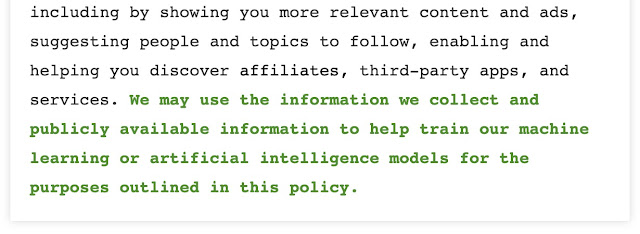
Today’s New York Times features an article that pulls back the curtain on how the AI handover is getting underway, how Google, Meta, X, et a...
-
 I was thinking the other day about the DNA of premium brands . One thing is certain -- it's a relative idea. For example, Hyatt is...
 -
 I don't know who authored this quote, but I found it in this video of a presentation Yves Behar gave at TED about the need for design t...
 -
 Today’s New York Times features an article that pulls back the curtain on how the AI handover is getting underway, how Google, Meta, X, et a...